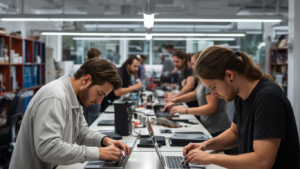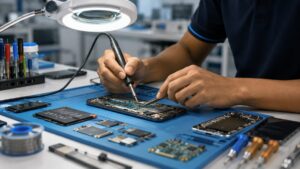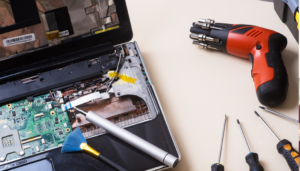
The Mobile Hardware and Software Course Kerala teaches students how to analyse, fix, and troubleshoot problems with smartphones from both hardware and software perspectives. This kind of training is available at Grandis Technology, located in Thodupuzha, Idukki, Kerala, where the course covers learning about different parts of a smartphone, diagnosing PCBs, soldering, BGA, firmware, OS Troubleshooting, and Servicing. The overall training process also includes laptop servicing.
What Is a Mobile Hardware and Software Course?
A mobile hardware and software course combines two areas of device servicing. Hardware training focuses on physical components and circuit-level faults, while software training deals with operating systems, firmware, configuration problems, and diagnostic procedures.
Difference Between Hardware Training and Software Training
In mobile hardware training, the trainees are expected to be able to spot faults with the different components of the smartphone such as ICs, charging circuitry, connectors, capacitors, display and motherboard portions. Trainees are taught how to use various devices like a multimeter, soldering machine, microscope, and hot-air rework station.
Mobile software training covers various elements like Android and iOS, firmware loading, software faults, smartphone settings, and troubleshooting of mobile OS. This is necessary since not all smartphone faults require changing the components.
Why Both Are Taught Together
A technician who understands only hardware may incorrectly replace components when the actual problem is software-related. Similarly, software knowledge alone is insufficient when a device has a damaged PCB or failed IC.
Learning both disciplines helps technicians diagnose the cause before attempting a repair, reducing unnecessary component replacement and improving service accuracy.
What Mobile Hardware Training Covers
Smartphone Components and PCB Basics
Hardware training starts with understanding how a smartphone is constructed and how its electronic sections interact.
Motherboard Structure and Circuit Layout
Students learn to identify major sections of a smartphone motherboard or PCB and understand basic circuit paths. Training can include power circuits, charging sections, audio circuits, display connections, and other functional areas.
Common Hardware Components (IC, Charging Port, Display Connector, etc.)
Learners become familiar with ICs, capacitors, resistors, coils, charging ports, display connectors, battery connectors, and other components. They also learn how component-level faults can affect device performance.
Tools Used in Hardware Training
Practical repair requires more than theoretical knowledge. Proper use of diagnostic and rework equipment is a central part of chip-level training.
Soldering Station and Hot Air Rework
A soldering station is used for controlled component work, while hot-air equipment helps technicians remove and install surface-mounted components. Students need to understand temperature control, soldering technique, and safe PCB handling.
BGA Machine and Microscope-Based Repair
Advanced chip-level work can involve BGA rework, where technicians work with densely packed components and solder connections. Microscope-based inspection helps identify damaged pads, solder joints, and small PCB components. Depending on the training setup, learners may also study techniques such as CPU reballing.
Multimeter and Diagnostic Tools
A multimeter is essential for checking continuity, resistance, voltage, and possible short circuits. Students learn how measurements can help narrow down a fault instead of relying on trial-and-error replacement.
Common Hardware Faults Students Learn to Fix
Charging and Battery Issues
Training can cover charging-port faults, battery-related problems, charging circuit issues, and motherboard-level diagnosis.
Display and Touch Faults
Technicians learn to investigate problems involving displays, connectors, touch functionality, and related circuit sections.
Water Damage and Short Circuit Repair
Water exposure can create corrosion, leakage, or short circuits. Chip-level training introduces methods for inspection, measurement, cleaning, and controlled troubleshooting.
What Mobile Software Training Covers
Operating System Basics (Android and iOS)
Software modules introduce learners to mobile operating-system concepts, particularly Android, while also providing awareness of iOS device servicing considerations. Understanding the OS helps technicians distinguish software faults from hardware failures.
Flashing, Firmware, and Software Troubleshooting
Firmware is the software layer that allows device hardware and the operating system to function together. Students may learn appropriate flashing procedures, firmware identification, backup considerations, and troubleshooting workflows.
Common Software Errors and Fixes
Training can address boot loops, system errors, failed updates, application-related problems, and other software symptoms using structured diagnostic methods.
Unlocking, FRP, and Pattern Issues
Training on mobile software can include genuine service routines regarding lock, pattern lock, and FRP. This procedure needs to be done only with the right authority and ownership proofs.
Diagnostic and Repair Software Tools
Technicians use manufacturer utilities, diagnostic applications, firmware resources, and other service tools to identify and resolve software problems. Students learn why selecting the correct firmware and following safe procedures matters.
Course Duration and Structure
A mobile repair course length in Kerala is dependent on the syllabus, practical work involved, and training system. It is important that a good mobile repairing course incorporates both theory classes and lab work.
Institutional Training Phase
The initial phase develops core knowledge of smartphone electronics, PCB components, diagnostic methods, soldering, software servicing, and chip-level repair techniques.
Practical Service Center Training Phase
A practical service-centre phase gives learners exposure to real repair workflows. Instead of studying isolated faults, students can practise diagnosis, documentation, component-level work, software servicing, and customer-device handling.
Who Should Take This Course
Students After +2 or Diploma
Students who have completed Plus Two, ITI, diploma, or similar education can consider mobile repair training as a technical skill pathway. A strong interest in electronics and practical work is more important than advanced academic qualifications.
Job Seekers Looking for a Technical Career
Those seeking technical employment can use hardware and software servicing skills to qualify for roles in mobile and electronics repair environments.
Aspiring Entrepreneurs Who Want to Start a Repair Business
The training can also be useful for people planning an independent repair shop. However, running a successful service business requires additional skills in pricing, customer service, inventory management, sourcing, and business operations.
Career Outcomes After the Course
Jobs at Authorized Service Centers
Trained technicians may pursue opportunities with authorized or independent service centres, subject to employer requirements and the technician’s actual skill level.
Starting an Independent Repair Shop
Experienced technicians can build their own repair businesses, particularly when they develop strong diagnostic abilities and can handle both software and chip-level hardware problems.
Career Opportunities Abroad
Mobile and electronics repair skills can also be relevant in international markets. The value of a qualification abroad depends on local employer requirements, certification recognition, practical experience, and the technician’s ability to work with current devices.
Why Choose Grandis Technology for This Course
Government-Certified Training (NCVET)
Grandis Technology provides training linked to the National Council for Vocational Education and Training (NCVET). Government accredited vocational certification could add extra worth in assessing technical training, although employers might also consider practical skills and experience.
Hands-On Lab with Industry-Grade Equipment
Practical learning plays a vital role in chip level training in Kerala since many repair methods cannot be learned only through theory. Training using microscopes, soldering irons, hot air systems, multimeters, BGA related equipment, and other repairing instruments helps to learn controlled workshop skills.
Placement Assistance and Career Support
Career counseling will assist students to learn about available technical careers, as well as other job opportunities at the service center. Grandis Technology works from Kerala, and is one of the companies within the Ashtel Group which is an international business group with branches in over 19 countries and over 160 locations.
When one considers a mobile repair training center in Kerala, the most important thing to consider is not whether or not the program offers mobile repair as an area of study, but rather whether there is sufficient supervised training to enable one to diagnose and repair mobiles successfully.
Frequently Asked Questions
How long does the Mobile Hardware and Software Course take?
The exact duration depends on the programme structure and syllabus. Students should evaluate how much of the course is dedicated to practical hardware diagnosis, chip-level repair, software servicing, and service-centre exposure rather than judging a programme only by its number of training days.
Do I need a technical background to join?
Not necessarily. Beginners can learn the fundamentals of electronics and mobile servicing through structured training, although patience, attention to detail, and regular hands-on practice are important for progressing to advanced repair work.
Is laptop training included, or is it mobile-only?
Some programmes combine mobile and laptop servicing. At Grandis Technology, the training ecosystem extends beyond smartphone repair into laptop chip-level servicing, making it relevant to learners who want broader technician skills.
What kind of jobs can I get after completing this course?
Potential pathways include mobile repair technician, chip-level technician, electronics service technician, software servicing technician, and repair-shop entrepreneur. Actual job opportunities depend on practical ability, certification, experience, location, and employer requirements.