The rapid growth of smartphones, laptops, tablets, and other electronic devices has created a growing need for skilled repair technicians. As people rely more heavily on their devices for communication, education, business, and entertainment, professional repair services continue to play an important role in the technology industry.
For students and aspiring technicians, mobile and laptop repair can be a practical career option that combines technical knowledge, hands-on skills, and opportunities for employment or self-employment. Grandis Technology provides specialized training in smartphone and laptop chip-level technology, with practical learning designed to develop industry-relevant repair skills.
Why Choose a Career in Mobile and Laptop Repair?
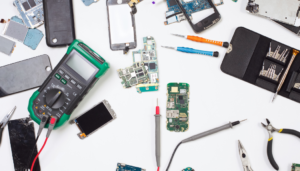
Mobile and laptop repair is more than replacing screens or batteries. Modern devices contain sophisticated motherboards, integrated circuits, processors, charging systems, and other electronic components that require proper diagnosis and repair.
A trained technician can identify hardware faults, troubleshoot motherboard problems, replace damaged components, and perform chip-level repairs. This makes technical expertise increasingly valuable as devices become more advanced.
Another advantage is the variety of career paths available. After gaining the right skills and experience, technicians can explore opportunities in:
- Mobile phone service centres
- Laptop repair centres
- Electronics service companies
- Authorized service environments
- IT hardware support
- Chip-level repair facilities
- Independent repair businesses
- Freelance technical services
Develop Strong Technical Fundamentals
The first step toward building a successful career is understanding the fundamentals of electronics and device technology.
Students should learn about:
- Basic electronic components
- Voltage and current
- Resistors, capacitors, and diodes
- Integrated circuits
- Mobile and laptop motherboards
- Power supply circuits
- Charging circuits
- Display and audio circuits
- USB and connectivity circuits
- Basic troubleshooting methods
A strong foundation makes it easier to understand complex motherboard-level problems later.
Learn Chip-Level Repair Skills
Chip-level repair is an important area for technicians who want to move beyond basic component replacement. It involves diagnosing faults at the motherboard and electronic-component level.
Technicians may need to understand circuit diagrams, identify faulty components, perform measurements, and use specialized equipment to locate problems.
Grandis Technology offers separate smartphone chip-level and smartphone-and-laptop chip-level technology training programs, combining institutional training with service-centre training.
Focus on Hands-On Practical Training
Reading theory alone is not enough to become a competent repair technician. Repair is a practical skill, and students need regular opportunities to work with actual devices and repair tools.
Hands-on training can help learners understand how to:
- Disassemble and assemble devices safely.
- Identify motherboard components.
- Use testing and measurement equipment.
- Diagnose hardware faults.
- Perform soldering and component-level work.
- Trace circuits and locate faults.
- Replace damaged components.
- Test repaired devices before returning them to customers.
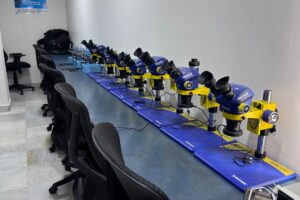
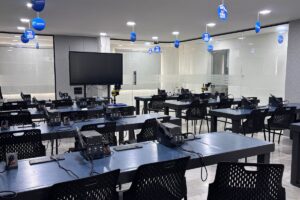
Grandis Technology highlights practical training facilities, technical labs, industry-standard tools, expert trainers, and access to modern mobile devices as part of its training environment.
Learn to Diagnose Problems Systematically
A successful technician does not simply replace parts until a device works. Proper diagnosis is one of the most important professional skills.
For example, if a smartphone does not switch on, the problem could be related to the battery, charging circuit, power-management section, motherboard, or another component.
A professional approach involves:
Identify → Test → Diagnose → Repair → Test Again
Developing this systematic approach can reduce unnecessary component replacements and improve repair accuracy.
Keep Up With New Technology
The electronics industry changes continuously. New smartphone models, processors, motherboard designs, laptop architectures, and repair techniques appear regularly.
Technicians should therefore continue learning after completing their initial course.
Keeping up with new technology may involve:
- Studying new motherboard designs
- Learning updated diagnostic techniques
- Practising with newer devices
- Understanding emerging repair tools
- Following developments in electronics
- Learning from experienced technicians
- Regularly improving soldering and troubleshooting skills
Continuous learning can help technicians remain competitive throughout their careers.
Gain Real-World Experience
Training provides the foundation, but experience builds confidence. Working in a service centre allows new technicians to encounter real customer problems and understand how professional repair operations work.
Experience can help develop additional skills such as:
- Customer communication
- Repair estimation
- Time management
- Device handling
- Quality control
- Troubleshooting under time constraints
- Maintaining repair records
Grandis Technology’s programs include service-centre training, giving learners an opportunity to develop practical exposure alongside institutional learning.
Develop Customer Service Skills
Technical ability is only one part of becoming a successful repair professional. Technicians also interact directly with customers.
Good communication helps technicians explain:
- What caused the problem
- What repair is required
- How long the repair may take
- Whether a component needs replacement
- How customers can prevent similar issues
Being transparent and professional can help build customer trust and encourage repeat business.
Consider Starting Your Own Repair Business
Mobile and laptop repair can also provide opportunities for entrepreneurship. After gaining sufficient technical knowledge and practical experience, a technician may consider starting an independent repair centre.
Before starting a business, it is important to understand:
- Repair equipment requirements
- Initial investment
- Spare-parts sourcing
- Customer management
- Pricing
- Warranty policies
- Inventory management
- Local market demand
- Business and financial planning
Starting with a strong technical foundation and gaining industry experience first can make the transition to entrepreneurship more manageable.
Choose the Right Training Institute
Choosing the right training program can significantly influence your learning experience. Look for an institute that provides a balance of theory and practical training rather than focusing exclusively on classroom instruction.
Important factors to consider include:
- Experienced trainers
- Practical laboratory facilities
- Industry-standard tools
- Hands-on device training
- Smartphone and laptop repair modules
- Chip-level technology
- Service-centre exposure
- Student support
- Career guidance
- Updated training methods
Grandis Technology currently lists smartphone chip-level and smartphone-and-laptop chip-level technology courses, along with practical training facilities at its branches in Thodupuzha and Egmore, Chennai.
Build Your Career Step by Step
A successful career in mobile and laptop repair does not happen overnight. It can be developed through a combination of education, practical experience, continuous learning, and professional discipline.
A possible career path is:
Basic Electronics → Professional Training → Practical Experience → Chip-Level Skills → Service Centre Experience → Advanced Specialization → Employment or Own Business
The more effectively you combine technical knowledge with practical problem-solving and customer service skills, the stronger your professional foundation can become.
Conclusion
Mobile and laptop repair offers an interesting career path for people who enjoy electronics, troubleshooting, and practical technical work. As electronic devices continue to be an important part of everyday life, skilled technicians will remain valuable for diagnosing and repairing hardware problems.
The key to long-term success is not simply completing a course. It is about learning the fundamentals, developing chip-level expertise, gaining hands-on experience, staying updated with technology, and continuously improving your repair skills.
For aspiring technicians, choosing a practical training program can be an important first step toward building a career in mobile and laptop repair. Grandis Technology focuses on practical, industry-oriented training to help students develop the technical skills required for the modern device repair industry.